Description
Learn more about “The Fire Inside”
This is a time, an era, of great decision-making, global conflicts, and the possibility of mass extinction for the first time in human history. We are also compelled to search for deeper ways to heal the ever-expanding manifestation of spiritual and psychological crises that are manifesting in epidemic numbers because of unprecedented challenges and social changes. Human beings do not like chaotic change. That is when we feel most vulnerable and frightened.
And yet.
Such extraordinary times offer us the opportunity to forge new ways of thinking, discover grace-filled resources within ourselves and embrace the wisdom and guidance from the great souls who also experienced personal human and social crises. Among the great souls to whom we should look for guidance is John of the Cross (1542-1591), a mystic-activist who was also a poet of the human soul. Carl G. Jung once wrote, “it is to the mystics we owe what is best in humanity.” We will use the poetry and guidance of John of the Cross to discover what is best in ourselves and how to access the depth of our power.
Like so many people, John of the Cross’s inner resources (in his case, his poetic soul) came alive during his most desperate time. Because he joined Teresa of Avila and other brothers to reform his Order, he was imprisoned by his fellow Carmelites for nine months during which time he was relentlessly tortured. It was during this brutal period that he wrote the poem, “The Canticle” and after escaping he wrote “The Dark Night of the Soul.” Today people often refer to their times of suffering as their “dark night,” unaware that they are also referring to the profound journey of spiritual transformation that this Spanish mystic, John of the Cross, so elegantly articulated shortly after escaping from prison four-plus centuries ago. Suffering does imprison us, so it is no wonder that somehow his poetic phrasing has found its way into our common parlance. In this class, we will explore the contemporary dark night of the soul, the way in which we undergo this profound mystical journey expresses itself in our everyday life.
John of the Cross was driven by holy inspiration which for him translated into the need to be an active agent of social change in the world, his world. He was a mystical activist. His great poem, “Canticle,” is a prayer to the beauty of nature and the grace of gratitude and delight. It is based on the “Song of Songs” in the Hebrew Bible and was written, by the way, while he was a prisoner. It is unimaginable to feel gratitude for one’s deepest challenges, so what is that rare grace that can be bestowed upon us during these times? Is gratitude or acceptance a part of this mystery? We need the grace John of the Cross describes so beautifully in our lives today, for all of us are in some way influenced by the chaos of these times. We have never lived in a more tumultuous collective psychic field. It is easy to lose our way, to feel overcome with helplessness when we see the landscape of challenges facing humanity. But here we are – born to live at this time. It is our collective challenge to navigate these times with soul creativity as well as gratitude and grace. Better to understand that we were born to navigate these rough waters and that this is our time.
For that reason and so much more, we will explore The Four Paths of Creation Spirituality, along with the guidance of John of the Cross. These four paths describe an archetypal journey of transformation in a similar way that John of the Cross offers a mystical description of the stages of transformation during the dark night. It is so often the case that deep despair and suffering can cause us to think our “imprisonment” will never end. But all mystical journeys of transformation are mystically mapped out, as I will describe in detail when we explore, The Four Paths of Creation Spirituality.
Finally, let me say a brief word about what it means to be a “mystic”. The status of “mystic” has profound archetypal and indeed cosmic significance. Mystics are lovers and often cosmic creatures, having shed the weight of the politics and limitations of the religious traditions into which they were born. Some are rare and remarkable people who become, in a way, like the design of the Universe itself: detached (as Buddha so brilliantly taught) to the cravings of the world and yet they were deeply in love with the intimacy and wonder of the Divine and its endless expressions within the human experience. Many experienced this Divine intimacy directly, having visions or hearing direct guidance. Francis of Assisi, for example. Others became wildly inspired by downloads of mystical poetry that sent them into states of ecstasy, such as Rumi. Buddha experienced an outpouring of the Divine as pure Light, become “enlightened.” Mystics belong to the cosmos, to the Divine, and not to any religion. They return to their religions to language those teachings from a mystical altitude, like the psalms or the mystical poetry of John of the Cross and Rumi and Hafiz. It is often the case that ordinary words fail at being able to express the power that is hidden within us, and that deeper path of our lives that seeks direct contact with that power.
Lesson 1:
The Life of John of the Cross and the basic concepts of Creation Spirituality
We begin with an introduction into the life of John of the Cross, including the tumultuous history of his day and of his parents’ love affair. Conflict then and conflict now – there is always a connection. And we will explore the concepts of Creation Spirituality that allow us to interpret John’s poetry in a fresh way.
Takeaways:
- How John’s childhood poverty and being of mixed race with a serious physical deformity allowed him to speak to the anawim (those without a voice), and prepared him as a healer.
- How his mother’s strength and his parent’s strong love for each other grounded him in a sense of the Divine Feminine.
- How the Four Paths of Creation Spirituality allow an interpretation of his work in a contemporary voice.
- How his poetry offers us a path of liberation.
- How key concepts of Creation Spirituality, such as the Cosmic Christ, panentheism; original blessing and nature as grace allow John to inspire us with great imagination.
- How John’s mystical and prophetic voice invite us to recover – or discover – our own mystical consciousness.
Lesson 2:
The Via Positiva (Positive Path) and John’s poem, The Canticle
John’s first poem is rich with praise of nature and the beauty of nature. He often took his students into nature to introduce them to the Divine. Nature is a mystic’s theater of life – but why is that? Why does our soul require an intimate relationship with the world in which we live? It is not enough to “see” the beauty; we must live the truth that all life breathes together.
Takeaways:
- An examination of the power and inspiration in John’s profound and ecstatic love of nature – the positive path of awe and wonder and delight (Via Positiva).
- How his poetry was and remains prison poetry.
- Mystical intimacy and why John referred to the Divine as, “the beloved.”
- The implicit presence of the Cosmic Christ in John’s love of nature and of love itself.
Lessons 3:
The Via Positiva and the Via Negativa (Negative Path) in John’s poem, The Dark Night of the Soul
In the midst of our darkest passages, the “fire inside of us” becomes our most precious resource, as John poetically describes in this renowned poem. What is this fire? How many stories have we read and seen of heroes and great warriors who seem to rise from near total defeat because suddenly the “fire inside of them” begins to burn more brightly than ever. It is that fire that drives them to acts of heroism – Divine fire.
Takeaways:
- The “fire inside” John that gave him the strength to escape prison.
- How the “fire inside” parallels Meister Eckhart’s teachings of the “spark of the soul” that he derived from Avicenna, a Muslim philosopher.
- Translating, “the dark night of the soul” to the “dark night of society”, according to Rabbi Heshel.
- Hafiz and the Dark Night
- “The dark night of our species” and our collective challenge today The soul choices we face.
Lesson 4:
Via Negativa: Addressing our Personal Dark Nights
I will supply a questionnaire for you to take as a way of identifying the personal journey of the dark night. Caroline will speak on the difference between a spiritual and a psychological crisis.
Takeaways:
- Exploring the many ways that we deal with the dark night today and how John helps us to “name” the dark.
- How many ways do we experience Dark Nights today? (Matt’s questionnaire relates to this question).
- John’s poem, “Although by Night”
- The dark night experienced by other species and the Earth itself.
- Caroline and Matt dialog on the difference between a spiritual and psychological crisis.
Lesson 5:
Via Creativa: How poetry saved the life of John of the Cross
Creativity, imagination, and faith have the power to sustain you through the dark night, as we will explore in this class.
Takeaways:
- Art as meditation
- The “way of the prophets”
- Metaphor, beauty and creativity contain the power to transform our world
- The profound role of the artist in times of challenge
- Identifying your creativity at the soul level
- John’s poem, “The Living Flame of Love”
Lesson 6:
The Via Transformativa
The path of transformation ends with profound mystical liberation – the shedding of burdens of fear and the inability to love and empower others.
Takeaways:
- John as prophet, spiritual warrior and sacred activist
- John’s failure
- Why John’s poetry survives and inspires us so deeply today.
- How John assists us to imagine a new healthy masculinity
- Incorporating the Divine Feminine and the Divine Masculine
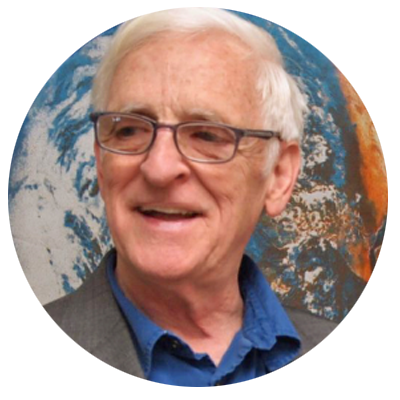
About Matthew Fox
Matthew Fox holds a doctorate in spirituality from the Institut Catholique de Paris and has authored 41 books on spirituality and contemporary culture that have been translated into 79 languages. Fox has devoted 45 years to developing and teaching the tradition of Creation Spirituality and in doing so has reinvented forms of education and worship. His work is inclusive of today’s science and world spiritual traditions and has awakened millions to the much neglected earth-based mystical tradition of the West. Among his books are Original Blessing, The Coming of the Cosmic Christ, The Reinvention of Work, A Spirituality Named Compassion, Meister Eckhart: A Mystic-Warrior for Our Times, and Julian of Norwich: Wisdom in a Time of Pandemic…and Beyond.
Fox founded the University of Creation Spirituality in Oakland, California in 1996 where where he was President and professor until 2005. He speaks regularly at professional and community gatherings around the world, and has led a renewal of liturgical forms with “The Cosmic Mass,” which mixes dance, techno and live music, DJ, VJ, rap and contemporary art forms with the Western liturgical tradition. He is a recipient of the Peace Abbey Courage of Conscience Award; other recipients have included the Dalai Lama, Mother Teresa and Rosa Parks. A visiting scholar at the Academy for the Love of Learning in Santa Fe, NM, and elsewhere, he resides in the San Francisco Bay Area, California.